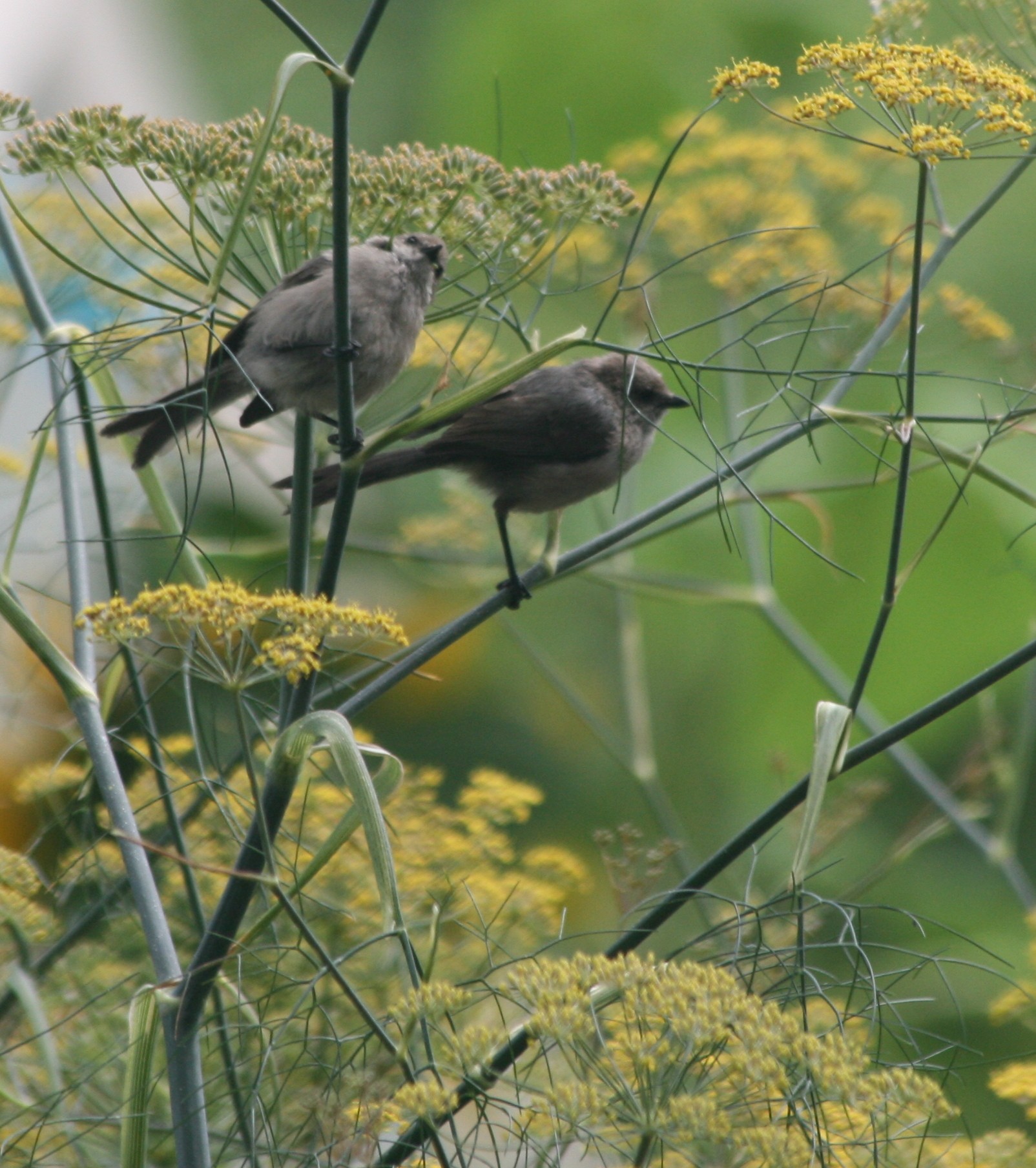
These bushtits have landed on some bronze fennel. These birds are very beneficial to the garden eating insects, ants and scale. They usually fly in flocks of 10-50 and like to eat hanging upside down.
General Landscaping Services Include:
- Monthly residential landscape maintenance: - expert pruning techniques- plant knowledge and required care- fertility management- edging, weeding and debris removal from garden beds - installation of garden soil, mulch or rock- site clean up
- Spring and fall clean up- pruning, weeding, edging beds, debris cleanup and green waste removal
- Vegetable gardening- planting vegetable beds, managing fertility, weeding, monitoring for pests and harvesting the bounty if requested
- Container gardening- fertilizing, watering, deadheading and weeding
- Pest/disease control- using integrated pest management which utilizes common sense practices, with a scientific based approach to managing insects, disease, weeds and other pests of landscapes.
- Fruit tree care- complete fruit tree care from pruning to preventative measures for pest and disease and fertility management
- Planting plan installation- sourcing plants for the site plan, obtaining a soil test, managing plant site and installing plants
Design Services Include:
- Consultation services- maintenance or design advice and plant identification
- Garden designs- beautiful and functional landscape designs
- Container designs- gorgeous ornamental, herb and edible
- Planting plans- any kind of planting plan that your heart desires
How We Work With Nature
- Working with nature creates a healthy landscape for people, plants, birds, pets and beneficial insects. In turn it contributes to cleaner air and waterways.
- It is cost effective as we believe you will spend less money on fertilizers and pesticides and less time on weeding and watering.
- We use ornamental and native plants. Native plants attract wildlife, restore habitat and native plants are beautiful.
- We avoid invasive species.
- We use the right plant and plant it in the right place. We choose the most suitable plants taking into consideration the optimal growing conditions, planting site, plant characteristics and any special ornamental effects.
- We plant edible shrubs, vegetables and fruit trees among ornamental plantings.
- We plant a diverse selection of plants to attract beneficial insects and pollinators to the garden.
- We use plants that are grown locally and are acclimatized to our area.
- We attract birds. They are vital to natures balance devouring millions of insects to help with plant health and seeds to help keep weeds under control.
- We take preventative measures by monitoring landscapes to find any issues in the landscape before it develops into a large issue.
Are you looking for :
A professional, dependable company to take care of your landscape, increased property value, then look no further, Mother Earth Gardens and Design Inc. is the company for you. We are a reliable, detail oriented company who's number one priority is customer satisfaction. We care about your property, the environment and all that live within it. We are a member of Worksafe BC and are fully insured.